
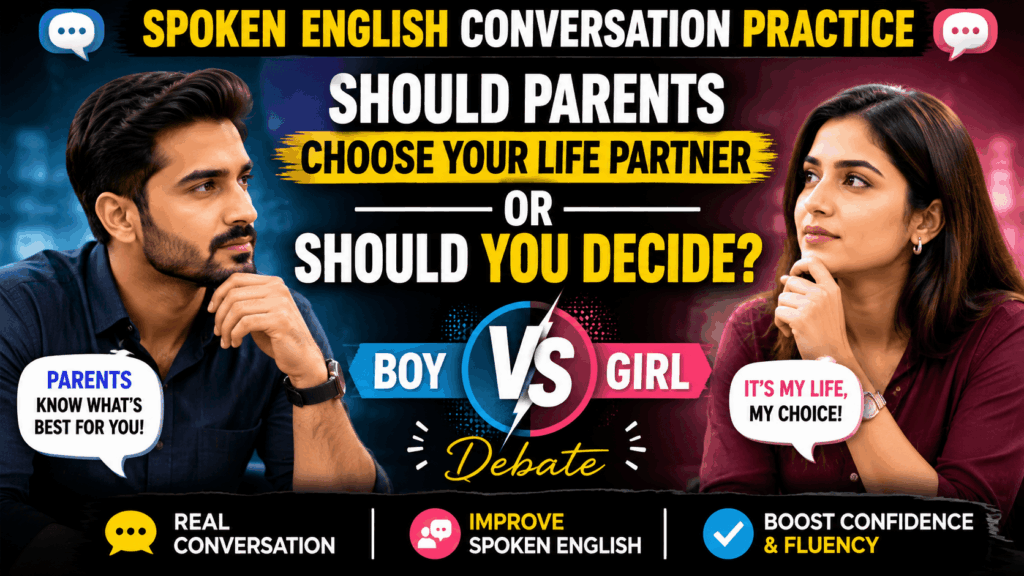
Are parents the best people to choose a life partner, or should everyone make this important decision themselves?
This **English Conversation Practice** presents a realistic discussion between a 28-year-old boy and a 26-year-old girl. Read their natural English dialogue with Hindi translations, improve your spoken English, and explore both sides of this thought-provoking topic through everyday conversation.
Marriage is one of the biggest decisions in a person’s life. Some people believe that parents should choose their children’s life partners because they have more experience and always think about their children’s future.
On the other hand, many young people believe that they should have the freedom to choose the person they want to spend their lives with.
In this English conversation, a **28-year-old boy** supports the idea that parents should choose life partners, while a **26-year-old girl** believes that everyone should have the right to choose their own partner.
Their discussion is friendly, emotional, logical, and full of real-life examples.
Let’s begin this interesting conversation.
English Conversation Practice
**Boy:** Do you think parents should choose our life partners?
**लड़का:** क्या तुम्हें लगता है कि माता–पिता को हमारे जीवनसाथी का चुनाव करना चाहिए?
**Girl:** Honestly, no. I think everyone should choose their own partner.
**लड़की:** सच कहूँ तो नहीं। मेरा मानना है कि हर व्यक्ति को अपना जीवनसाथी खुद चुनना चाहिए।
**Boy:** But parents have much more experience than us.
**लड़का:** लेकिन माता–पिता के पास हमसे कहीं अधिक अनुभव होता है।
**Girl:** Experience is important, but they can’t understand our feelings completely.
**लड़की:** अनुभव ज़रूरी है, लेकिन वे हमारी भावनाओं को पूरी तरह नहीं समझ सकते।
**Boy:** Parents have seen the world. They can judge people’s character better.
**लड़का:** माता–पिता ने दुनिया देखी है। वे लोगों के स्वभाव को बेहतर समझ सकते हैं।
**Girl:** Sometimes they judge people by money, family status, or society.
**लड़की:** कई बार वे लोगों का मूल्यांकन पैसे, परिवार या समाज के आधार पर करते हैं।
**Boy:** Isn’t financial stability important after marriage?
**लड़का:** क्या शादी के बाद आर्थिक स्थिरता ज़रूरी नहीं होती?
**Girl:** Of course, it is. But money alone cannot make a marriage successful.
**लड़की:** बिल्कुल ज़रूरी होती है। लेकिन केवल पैसा शादी को सफल नहीं बना सकता।
**Boy:** Parents usually think about our future, not their own.
**लड़का:** माता–पिता हमेशा हमारे भविष्य के बारे में सोचते हैं, अपने बारे में नहीं।
**Girl:** I agree, but sometimes they decide according to their dreams instead of ours.
**लड़की:** मैं मानती हूँ, लेकिन कई बार वे अपने सपनों के अनुसार फैसला लेते हैं, हमारे नहीं।
**Boy:** They have spent their whole life taking care of us. Why shouldn’t we trust them?
**लड़का:** उन्होंने पूरी ज़िंदगी हमारी देखभाल की है। फिर हम उन पर भरोसा क्यों न करें?
**Girl:** Trust doesn’t mean giving up the right to make our own decisions.
**लड़की:** भरोसा करने का मतलब यह नहीं कि हम अपने फैसले लेने का अधिकार छोड़ दें।
**Boy:** Many arranged marriages become successful because families support the couple.
English Conversation Practice
**लड़का:** बहुत–सी अरेंज मैरिज सफल होती हैं क्योंकि दोनों परिवार उनका साथ देते हैं।
**Girl:** Many love marriages are successful too because the couple already understands each other.
**लड़की:** बहुत–सी लव मैरिज भी सफल होती हैं क्योंकि दोनों पहले से एक–दूसरे को समझते हैं।
**Boy:** But love can make people ignore red flags.
**लड़का:** लेकिन प्यार में लोग कई बार सामने दिख रही कमियों को भी नज़रअंदाज़ कर देते हैं।
**Girl:** Parents can also make mistakes while choosing someone.
**लड़की:** माता–पिता भी किसी का चुनाव करते समय गलती कर सकते हैं।
**Boy:** No one is perfect, but parents usually make fewer mistakes.
**लड़का:** कोई भी परफेक्ट नहीं होता, लेकिन माता–पिता आमतौर पर कम गलतियाँ करते हैं।
**Girl:** That’s not always true. Every generation thinks differently.
**लड़की:** यह हमेशा सही नहीं होता। हर पीढ़ी की सोच अलग होती है।
**Boy:** Marriage is not only between two people. It is also between two families.
**लड़का:** शादी केवल दो लोगों के बीच नहीं होती। यह दो परिवारों के बीच भी होती है।
**Girl:** I agree, but the husband and wife have to live together every day, not the families.
**लड़की:** मैं मानती हूँ, लेकिन हर दिन साथ पति–पत्नी को रहना होता है, परिवारों को नहीं।
**Boy:** Suppose your parents reject the person you love. What will you do?
**लड़का:** मान लो तुम्हारे माता–पिता उस व्यक्ति को मना कर दें जिससे तुम प्यार करती हो। तब क्या करोगी?
**Girl:** First, I’ll try to understand their reasons. Then I’ll explain my point respectfully.
**लड़की:** सबसे पहले मैं उनकी वजह समझने की कोशिश करूँगी। फिर सम्मान के साथ अपनी बात समझाऊँगी।
**Boy:** What if they still disagree?
**लड़का:** अगर उसके बाद भी वे नहीं माने तो?
**Girl:** Then I’ll need to decide whether their concern is genuine or only based on social pressure.
**लड़की:** तब मुझे यह तय करना होगा कि उनकी चिंता वास्तव में सही है या केवल समाज के दबाव की वजह से है।
**Boy:** Society matters because we don’t live alone.
**लड़का:** समाज भी मायने रखता है क्योंकि हम अकेले नहीं रहते।
**Girl:** Society changes every few years. Our happiness should not depend completely on other people’s opinions.
**लड़की:** समाज हर कुछ वर्षों में बदल जाता है। हमारी खुशी पूरी तरह दूसरों की राय पर निर्भर नहीं होनी चाहिए।
**Boy:** Let me ask you one final question.
**लड़का:** चलो, मैं तुमसे एक आख़िरी सवाल पूछता हूँ।
**Girl:** Go ahead. I’m listening.
**लड़की:** पूछो। मैं सुन रही हूँ।
**Boy:** What if the person you choose changes completely after marriage? Will you still believe that parents should not decide?
**लड़का:** अगर शादी के बाद तुम्हारा चुना हुआ व्यक्ति पूरी तरह बदल जाए, तब भी क्या तुम यही मानोगी कि माता–पिता को फैसला नहीं करना चाहिए?
**Girl:** That’s a difficult question… and I don’t have a simple answer.
**लड़की:** यह सचमुच कठिन सवाल है… और इसका मेरे पास कोई आसान जवाब नहीं है।
She remained silent for a few seconds.
For the first time, even she started wondering whether love alone is enough for a successful marriage—or whether parents’ experience can sometimes save us from making the biggest mistake of our lives.
English Conversation Practice
**Boy:** You became quiet. Does that mean you are changing your opinion?
**लड़का:** तुम अचानक चुप हो गई। क्या इसका मतलब है कि तुम अपनी राय बदल रही हो?
**Girl:** No, I’m just thinking seriously. Marriage is not a small decision.
**लड़की:** नहीं, मैं बस गंभीरता से सोच रही हूँ। शादी कोई छोटा फैसला नहीं है।
**Boy:** That’s exactly why parents should guide us.
**लड़का:** यही तो मैं कह रहा हूँ। इसलिए माता–पिता का मार्गदर्शन ज़रूरी है।
**Girl:** Guidance is always welcome, but control is not.
**लड़की:** मार्गदर्शन हमेशा अच्छा होता है, लेकिन नियंत्रण नहीं।
**Boy:** Imagine a 22-year-old who falls in love within a month. Can such a person make the best decision?
**लड़का:** सोचो, कोई 22 साल का लड़का या लड़की एक महीने में प्यार में पड़ जाए। क्या वह सही फैसला कर पाएगा?
**Girl:** Maybe not. But parents should explain the risks instead of forcing a decision.
**लड़की:** शायद नहीं। लेकिन माता–पिता को फैसला थोपने के बजाय जोखिम समझाने चाहिए।
**Boy:** My cousin agreed to an arranged marriage chosen by his parents. Today, they have a happy family and two wonderful children.
**लड़का:** मेरे चचेरे भाई ने अपने माता–पिता की पसंद से शादी की। आज उनका खुशहाल परिवार है और दो प्यारे बच्चे हैं।
**Girl:** That’s wonderful. I also know a couple who chose each other after knowing each other for five years. They respect each other deeply and are living happily.
**लड़की:** यह बहुत अच्छी बात है। मैं भी एक ऐसे दंपति को जानती हूँ जिन्होंने पाँच साल तक एक–दूसरे को समझने के बाद शादी की। वे भी बहुत खुश हैं।
**Boy:** So both examples are successful.
**लड़का:** यानी दोनों उदाहरण सफल हैं।
**Girl:** Exactly. Success depends on understanding, respect, honesty, and commitment—not only on who made the choice.
**लड़की:** बिल्कुल। सफलता इस बात पर निर्भर करती है कि रिश्ते में समझ, सम्मान, ईमानदारी और प्रतिबद्धता कितनी है, केवल इस पर नहीं कि चुनाव किसने किया।
**Boy:** Still, parents can notice things that we cannot.
**लड़का:** फिर भी माता–पिता कई ऐसी बातें देख लेते हैं जो हम नहीं देख पाते।
**Girl:** And sometimes young people notice compatibility that parents cannot see.
**लड़की:** और कई बार युवा ऐसी आपसी समझ देख लेते हैं जिसे माता–पिता नहीं समझ पाते।
**Boy:** Do you think children should ignore their parents completely?
**लड़का:** क्या तुम्हें लगता है कि बच्चों को अपने माता–पिता की बात पूरी तरह अनदेखा कर देनी चाहिए?
**Girl:** Never. Ignoring parents is as wrong as ignoring your own heart.
**लड़की:** बिल्कुल नहीं। माता–पिता की बात अनदेखी करना उतना ही गलत है जितना अपनी भावनाओं को पूरी तरह दबा देना।
**Boy:** Then what is the best solution?
**लड़का:** फिर सबसे अच्छा समाधान क्या है?
**Girl:** Open communication. Both parents and children should listen to each other without anger.
**लड़की:** खुलकर बातचीत। माता–पिता और बच्चों दोनों को बिना गुस्से के एक–दूसरे की बात सुननी चाहिए।
**Boy:** That sounds practical.
**लड़का:** यह बात व्यावहारिक लगती है।
**Girl:** Marriage should never become a battle between parents and children.
**लड़की:** शादी कभी भी माता–पिता और बच्चों के बीच की लड़ाई नहीं बननी चाहिए।
**Boy:** I think parents deserve respect because they have sacrificed so much for us.
**लड़का:** मेरा मानना है कि माता–पिता सम्मान के हकदार हैं क्योंकि उन्होंने हमारे लिए बहुत त्याग किया है।
**Girl:** I completely agree. Respect should always remain, even when opinions are different.
**लड़की:** मैं पूरी तरह सहमत हूँ। विचार अलग हों, फिर भी सम्मान हमेशा बना रहना चाहिए।
**Boy:** Maybe parents should not make the final decision alone.
**लड़का:** शायद माता–पिता को अकेले अंतिम फैसला नहीं लेना चाहिए।
**Girl:** And maybe children should not make the final decision without discussing it with their parents.
**लड़की:** और शायद बच्चों को भी बिना माता–पिता से चर्चा किए अंतिम फैसला नहीं लेना चाहिए।
**Boy:** So marriage is a shared responsibility.
**लड़का:** यानी शादी एक साझा जिम्मेदारी है।
**Girl:** Yes. The best marriages are built on trust, understanding, and honest conversations.
**लड़की:** हाँ। सबसे सफल शादियाँ भरोसे, समझ और ईमानदार बातचीत पर टिकती हैं।
**Boy:** I still believe parents’ experience is priceless.
**लड़का:** मैं अब भी मानता हूँ कि माता–पिता का अनुभव अनमोल है।
**Girl:** And I still believe every adult should have the freedom to choose wisely.
**लड़की:** और मैं अब भी मानती हूँ कि हर वयस्क को समझदारी से अपना चुनाव करने की स्वतंत्रता होनी चाहिए।
**Boy:** Maybe we don’t completely agree…
**लड़का:** शायद हमारी पूरी तरह सहमति नहीं बनी…
**Girl:** …but we understand each other’s perspective much better now.
**लड़की:** …लेकिन अब हम एक–दूसरे के दृष्टिकोण को पहले से कहीं बेहतर समझते हैं।
**Boy:** That’s the real success of any discussion.
**लड़का:** यही किसी भी चर्चा की असली सफलता होती है।
**Girl:** Absolutely. Winning an argument is less important than understanding each other.
**लड़की:** बिल्कुल। बहस जीतने से ज़्यादा महत्वपूर्ण एक–दूसरे को समझना है।
Moral
Every family and every relationship is different. Parents have valuable experience, while young adults know their own feelings and life goals.
The wisest decision often comes when both generations listen to each other with patience, respect, and honesty.
Marriage is strongest when it is built on trust, communication, and mutual understanding—not on fear or pressure.
English Conversation Practice
ADVICE FROM AUTHOR
This **English Conversation Practice** shows that there is no single answer to choosing a life partner. Parents offer valuable experience, while individuals understand their own feelings and goals.
The best decisions are made through mutual respect, open communication, and trust. Keep practicing such English conversations to improve your spoken English naturally and confidently every day.
There is no single answer to the question, **”Should parents choose your life partner?”** Some families succeed with arranged marriages, while others build happy lives through self-choice.
The key is not whether parents or children make the first move, but whether the final decision is made with respect, trust, maturity, and open communication.
When both generations work together instead of against each other, the chances of a happy and lasting marriage become much stronger.
English Conversation Practice
Vocabulary
| Word | Hindi Meaning |
| ————– | ————- |
| Perspective | दृष्टिकोण |
| Commitment | प्रतिबद्धता |
| Compatibility | आपसी अनुकूलता |
| Respect | सम्मान |
| Sacrifice | त्याग |
| Freedom | स्वतंत्रता |
| Responsibility | जिम्मेदारी |
| Guidance | मार्गदर्शन |
| Trust | भरोसा |
| Decision | निर्णय |
| Experience | अनुभव |
| Communication | संवाद |
| Honest | ईमानदार |
| Mature | परिपक्व |
| Relationship | रिश्ता |
English Conversation Practice
20 Important Spoken English Sentences
1. What do you think about it?
2. I completely agree with you.
3. I don’t think that’s true.
4. Everyone has a different opinion.
5. Please listen to me carefully.
6. Let me explain my point.
7. That’s a good question.
8. I respect your opinion.
9. You may be right.
10. I have a different perspective.
11. We should think carefully.
12. Every decision has consequences.
13. Experience matters.
14. Feelings are important too.
15. Let’s discuss it calmly.
16. We should not judge people quickly.
17. Trust takes time.
18. Communication solves many problems.
19. Nobody is perfect.
20. Understanding is more important than winning.